

Meet the organisers
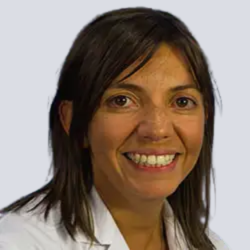
Delia D’Avola
Delia D'Avola graduated in Medicine from the Università Campus Bio-Medico di Roma in 2003 and completed her residency in Internal Medicine there in 2008. She obtained her PhD in 2011 from the University of Navarra, where she has worked since 2008 as a specialist in Hepatology and Internal Medicine at its University Hospital (Clínica Universidad de Navarra).
Over the past decade, she has developed a translational research career focused on advanced therapies and first-in-human clinical trials in metabolic liver diseases and liver cancer. Her scientific contributions include novel methodologies in immunotherapy, gene therapy, cell therapy, and precision medicine, together with extensive experience in Y-90 radioembolization.
She has actively contributed to the development of advanced therapeutic strategies for patients with severe liver diseases lacking effective alternatives. In the field of radioembolization, she has participated in projects aimed at improving treatment safety and refining clinical selection criteria, particularly in complex scenarios, generating evidence with direct applicability to routine clinical practice.
She has participated in several competitively funded projects, with responsibilities that include designing complex clinical trial protocols, leading multidisciplinary teams, and guiding data interpretation and scientific output. Her expertise in cancer immunotherapy, liquid biopsy, circulating nucleic acids, extracellular vesicles, and circulating tumor cells was further strengthened during a research fellowship at the Icahn School of Medicine at Mount Sinai (2015–2017).
Her research consistently bridges experimental science and clinical application. Clinically, her activity is focused on liver cancer and, more recently, MASLD.
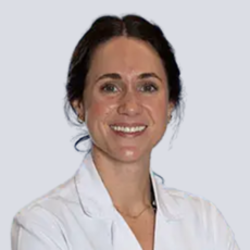
Paloma Sangro
Paloma Sangro obtained her Medical Degree in Medicine and Surgery in 2014 from the Complutense University of Madrid. In 2012, as a complement to her university training, she completed an external rotation at the Clínica Universidad de Navarra in the Hepatology Unit, where she had her first contact with clinical trials and research projects, mainly related to therapies for hepatocellular carcinoma (HCC).
While completing her undergraduate thesis in 2014, her interest in novel therapies for onco-hematological diseases based on immunology and genetics increased. For this reason, after starting her medical residency in Internal Medicine in 2015 at the Clínica Universidad de Navarra, she decided to focus her PhD research project on this field. She worked on two research projects related to deregulated non-coding genes in hepatocellular carcinoma, and as a result of this work, she defended her doctoral thesis in November 2020. After completing her residency, she joined the Clínica Universidad de Navarra in Madrid in June 2020.
During the COVID-19 pandemic, she also participated in three research projects related to this topic, with the aim of better understanding the behavior of the virus and the infection.
Currently, she is initiating the development of new research projects related to hepatocellular carcinoma and tumor biomarkers in plasma, as well as fatty liver disease. Indeed, she is focusing her interest on the relationship between the microbiome and liver cancer.
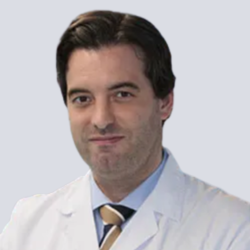
Manuel de la Torre
Manuel de la Torre is a hepatologist working in the Liver Unit of the Internal Medicine Department, where he is also involved as a clinical investigator in clinical trials. The Liver Unit coordinates the Hepatobiliary Disease Area, a multidisciplinary platform dedicated to the management of primary and metastatic liver tumors.
He obtained his medical degree from the University of Navarra in 2011 and completed his residency in Internal Medicine at Clínica Universidad de Navarra in 2017. Since then, he has been working as a specialist in Internal Medicine and Hepatology, with a particular focus on liver tumors, especially hepatocellular carcinoma. He obtained his PhD in 2018, with a thesis focused on patients with hepatocellular carcinoma and portal vein invasion treated with radioembolization. He also completed a six-month observership at Clatterbridge Cancer Centre (University of Liverpool, UK), focusing on hepatopancreatobiliary oncology and hepatology clinics.
His clinical and research activities are focused on the management of liver tumors and their complications, as well as on the recruitment of patients with hepatocellular carcinoma for clinical trials.